Tourmaline and Precious Stones: Suzanne Belperron's Rainbow
Suzanne Belperron drew from a mineral palette of extraordinary richness to create jewellery with bold chromatic harmonies. Tourmaline, peridot, jade: these stones with infinite nuances became in her hands the instruments of a symphony of colours that defied the conventions of high jewellery.
Tourmaline: The Stone of a Thousand Colours
A Unique Chromatic Diversity
Tourmaline is the stone that offers the greatest chromatic diversity: all the nuances of the rainbow, to which are added colourless and black. Introduced to Europe in the 18th century by the Dutch, who brought it from Ceylon (present-day Sri Lanka), it was highly prized by Art Nouveau jewellers, including René Lalique.
The wide range of its hues with their various nuances makes it a remarkable gem for decorative effects. The most common are green, pink and polychrome tourmalines; the most distinctive range from gold to orange, passing through yellow. The most sought-after at the time, red in colour, is called rubellite.
Tourmaline and Precious Stones: Bold Alliances
Suzanne Belperron combined tourmalines and precious stones in her creations with a boldness characteristic of her style. This combination of fine stones and noble gems demonstrates her conviction that the beauty of a jewel lies in the harmony of colours and forms, not in the commercial value of the materials.
The Pink Tourmaline Ring (1944)
A yellow gold ring, adorned with a carved pink tourmaline and two kunzites, dated 1944, perfectly illustrates Belperron's talent for marrying stones of similar tones. The pink tourmaline, delicately carved, dialogues with the kunzites in a harmony of pinks that demonstrates absolute mastery of nuances.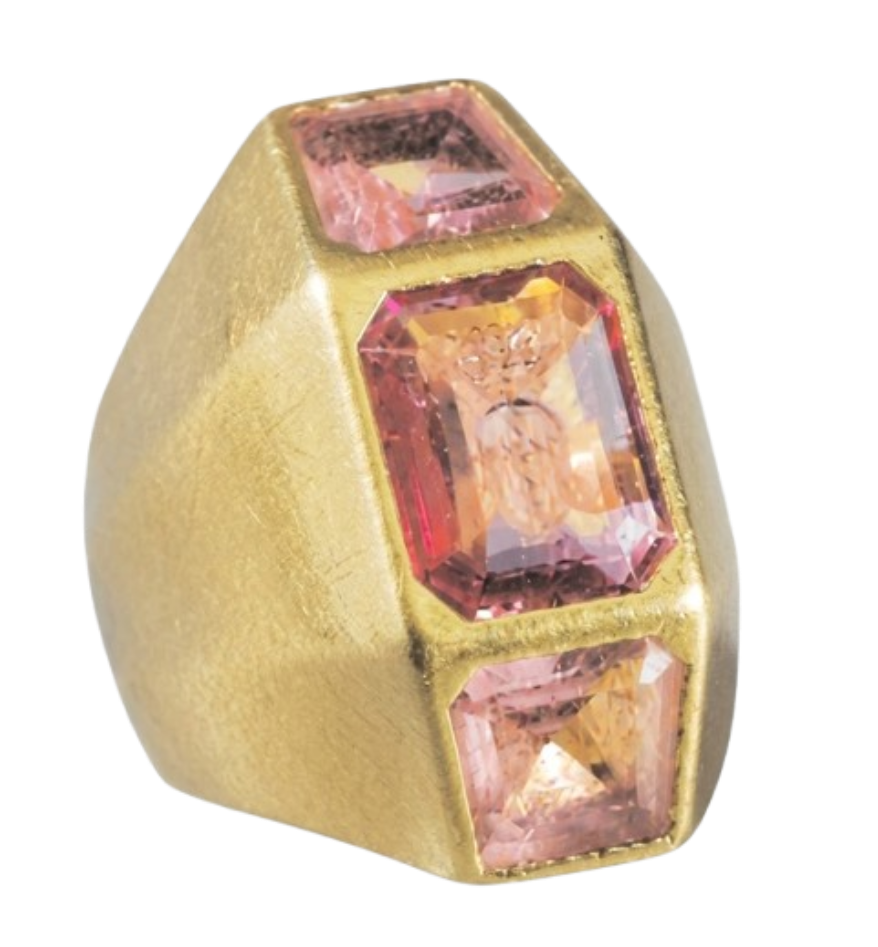
Peridot: The Emerald of the Crusaders
A Stone Steeped in History
The nuances of peridots range from lime green to olive green. These stones have been highly sought after since antiquity. The Egyptians led expeditions to the Red Sea as far as the island of Zabargad "olivine" in Egyptian to obtain them.
Having become famous in the West under the name "stone of the knights" or "emerald of the Crusaders", they were brought back to Europe by knights returning from the Crusades. This thousand-year history gives peridot a romantic dimension that Suzanne Belperron knew how to exploit in her creations.
Delicate Craftsmanship
Despite the fragility of these limpid stones, which makes their cutting and setting delicate, Suzanne Belperron did not hesitate to use them. She imagined jewels combining the opacity of pale green jade with the brilliant sparkle of deep green emeralds, thus creating contrasts of texture and luminosity.
The Foliage Brooch in Peridots and Tourmalines
A yellow gold brooch with stylised foliage decoration, composed of peridots, tourmalines and olivines of different sizes and dimensions, illustrates Belperron's ability to orchestrate a multitude of greens in a single creation. The Dome ring in yellow gold, set with peridots, tourmalines and olivines, takes up this principle of chromatic accumulation with brilliance.
Jade: The Stone of Immortality
Appreciated by the Chinese for millennia, jade, a pledge of immortality, symbolises moral virtues. This stone ranges from very pale, whitish green to intense green, or mauve and pink.
Jade is also highly sought after in Central America, where its rarity makes it an object of desire, as shown by Olmec sculptures and massive statuettes dating from Prehistory. From the Neolithic to the present day, jade has been used without interruption for jewellery, ritual and decorative objects.
The Pinnacle of Jade Craftsmanship
The mastery of jade working reached its peak in India in the 17th century, under the Mughal dynasty: it was then frequently inlaid with gold threads and set with cabochon precious stones. This tradition inspired Suzanne Belperron, who made jade one of her favourite stones.
Jade in Belperron's Personal Collection
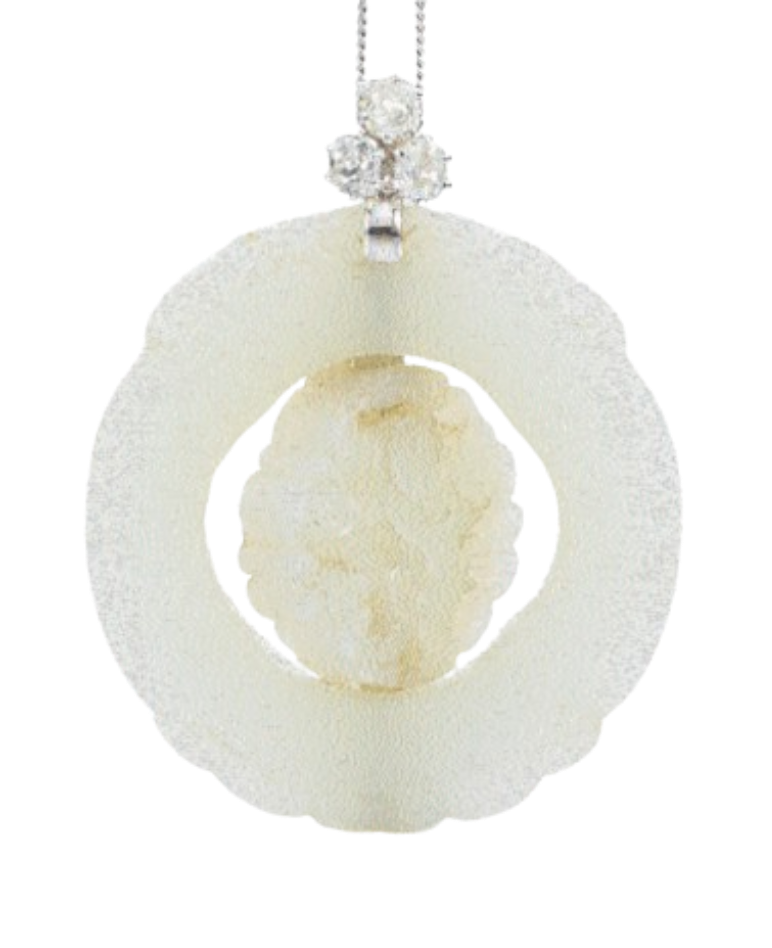
A fashionable stone in the Art Deco era, jade was one of Suzanne Belperron's favourite stones. Her personal jewellery cases contained:
- A carved white jade pendant, adorned with a bail enhanced with three diamonds
- An oval white jade bracelet cut in twisted gadroons to which are attached five charms in coral and hard stones
These personal pieces bear witness to the designer's intimate attachment to this ancient stone.
The Art of Chromatic Combinations
Suzanne Belperron excelled in the art of marrying stones with complementary or contrasting tones:
- Pink tourmaline and kunzite: a harmony of pinks of great delicacy
- Peridot and green tourmaline: a camaïeu of greens ranging from lime to olive
- Jade and emerald: the contrast between the opacity of jade and the brilliance of emerald
- Jade and coral: the alliance of pale green and vivid red, inspired by Oriental parures
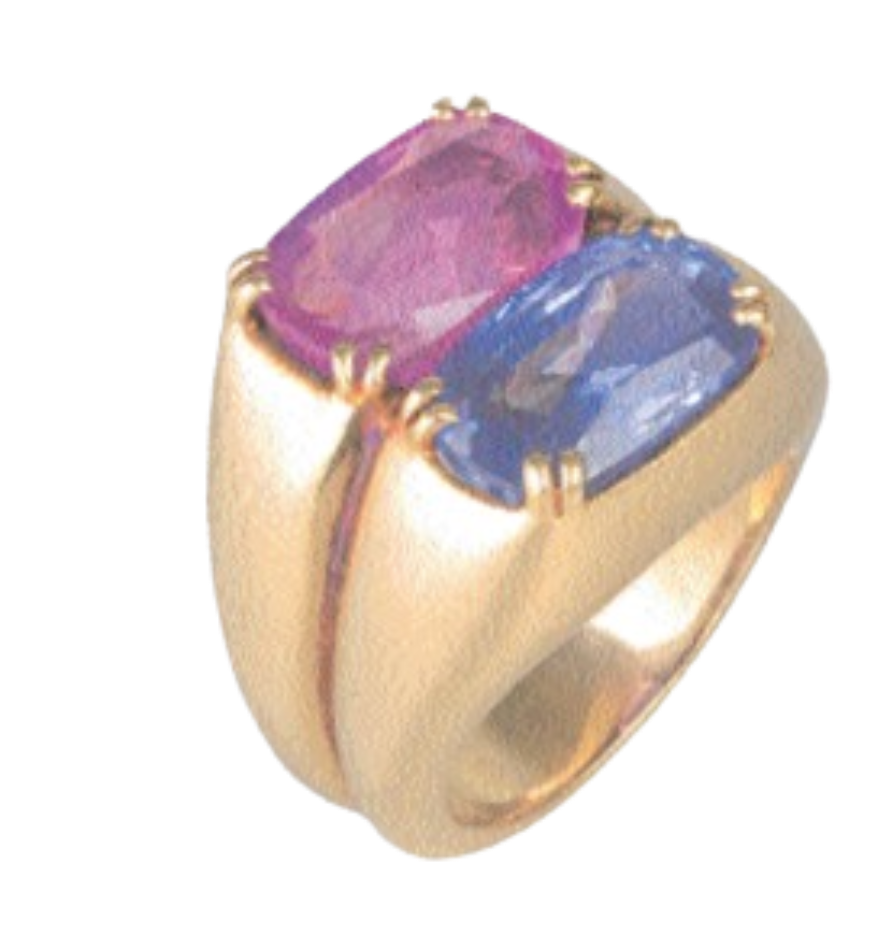
- Pink sapphire and blue sapphire: a double-body ring playing on the contrasts of the same stone
The Importance of the Archives for Authentication
A tricky problem arises for all jewellery created in hard stones such as tourmaline, peridot or jade: these materials make it impossible to apply any hallmark. Only the archives rediscovered in 2007 by Olivier Baroin make it possible to trace the original order of the jewel and to identify with certainty the authentic creations of Suzanne Belperron.
A Polychrome Heritage
By elevating tourmaline, peridot and jade in high jewellery, Suzanne Belperron demonstrated that these rainbow-coloured stones could rival the most precious gems in elegance. Her polychrome creations continue to fascinate collectors and achieve remarkable prices at international auctions.
The pieces exhibited in the galleries of Olivier Baroin bear witness to this heritage: tourmaline, peridot and jade become in Belperron's hands the instruments of a mineral palette of infinite richness.